
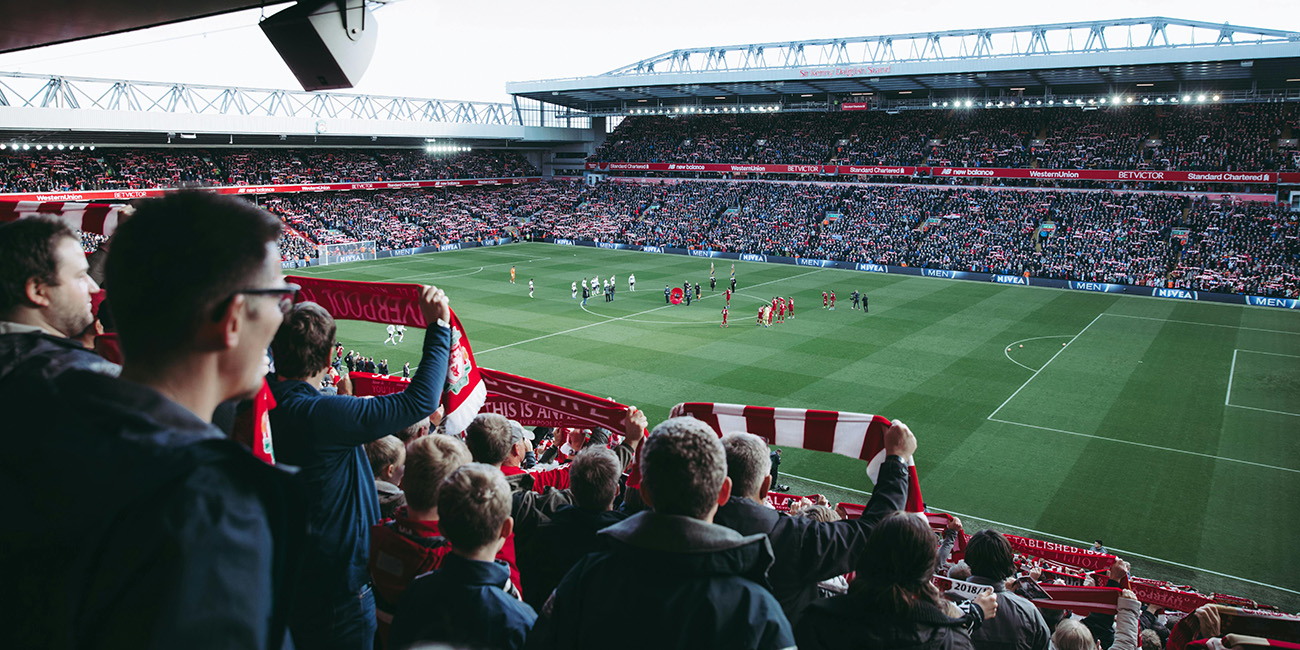
Football at the Centre, but Not Alone
The word “matchday” still carries weight. It still means supporters turning up early, following routines they’ve had for years, and placing unreasonable emotional investment in 90 minutes of sport. But by 2025, the shape of matchday has changed, not radically, but noticeably.
The football remains central. That much hasn’t changed, and probably never will. But surrounding that core is a growing sphere of habits and interests that weren't always part of the day. For a growing number of fans, horse racing has quietly stepped into that space.
It’s not replacing football, nor is it trying to. It’s become a sort of companion activity, a way to round out the day, particularly when the result on the pitch doesn’t give you much else.
An Old Connection, Reinvented
To be clear, football and horse racing have shared Saturdays for generations. They were often found side by side in the back pages of newspapers, and for some fans, a bet on a horse before the match was simply routine.
The difference now is how much easier it is to access. A quick check on a phone is all it takes. No trip to the bookie, no printed racecards, no need to break stride between the pub and the stadium. A small flutter is now something done in passing, not central, but part of the rhythm.
That integration feels casual, not calculated. It’s not about chasing a win. It’s about adding a second thread of interest to a day that might otherwise rest entirely on a team’s ability to defend set pieces.
Split Attention or Widened Interest?
There’s always a question that comes up here: Are fans just distracted? Is football not enough anymore?
Not necessarily. If anything, fans are more engaged now than ever. They’re watching multiple games, debating tactics in real time, tracking stats, injury updates, and post-match analysis. That kind of saturation doesn’t suggest a loss of interest. It suggests an audience that’s adapted to a new media environment and is engaging in ways that simply weren’t available a decade ago.
Racing, in this context, fits because it’s brief and reactive. A race lasts a few minutes. The result is immediate. It doesn’t compete with football. It fills the space around it.
When Simplicity Becomes Friction
There’s also a practical dimension. For many fans, trying to place a basic bet on a race has become harder than it should be. Increased regulation, while well-intended, has introduced friction, stake limits, account restrictions, verification hurdles. It’s meant to protect users, but it can often feel like a barrier to participation.
That’s why some have started turning to offshore horse racing options that offer fewer restrictions. Not because they want to bypass responsibility, but because they want a smoother experience. A bet should be simple. When it becomes more complicated than the sport itself, something has gone wrong in the design.
It’s not a protest. It’s a practical decision.
Cultural Change, Not Collapse
There’s a tendency to treat changes in football culture as decline. As if any shift away from a narrow tradition is somehow a loss. But that assumes the matchday experience was ever static, which it wasn’t.
Football fandom has always evolved. What matters is the substance underneath. Fans still show up, still care, still sing, still argue about formations. The rest, the racing, the streaming, the side conversations, those are additions. Not threats.
And they often serve a purpose. A fan who just watched a frustrating 1-1 might still leave the ground with a bit of optimism because a horse they backed earlier managed to win. That’s not abandoning the sport. It’s managing the emotional weight of it.
Some Things Don’t Change
At the centre of all this is a simple truth: football still matters. More than the racing, more than the technology, more than any side habit. It’s still the thing that brings people together on a Saturday, still the thing that defines the mood of the weekend.
But in a time where everything moves faster and access is wider, the way people experience sport has broadened. And for many, that’s a positive development. It’s not about escaping the result. It’s about building a matchday experience that has more than one note.
And when the result does go your way, when the goal goes in, the crowd erupts, and the moment hits, none of the other stuff matters. It’s all just background. But if it doesn’t, it helps to have something else in the mix.
That’s not a distraction. That’s balance.