
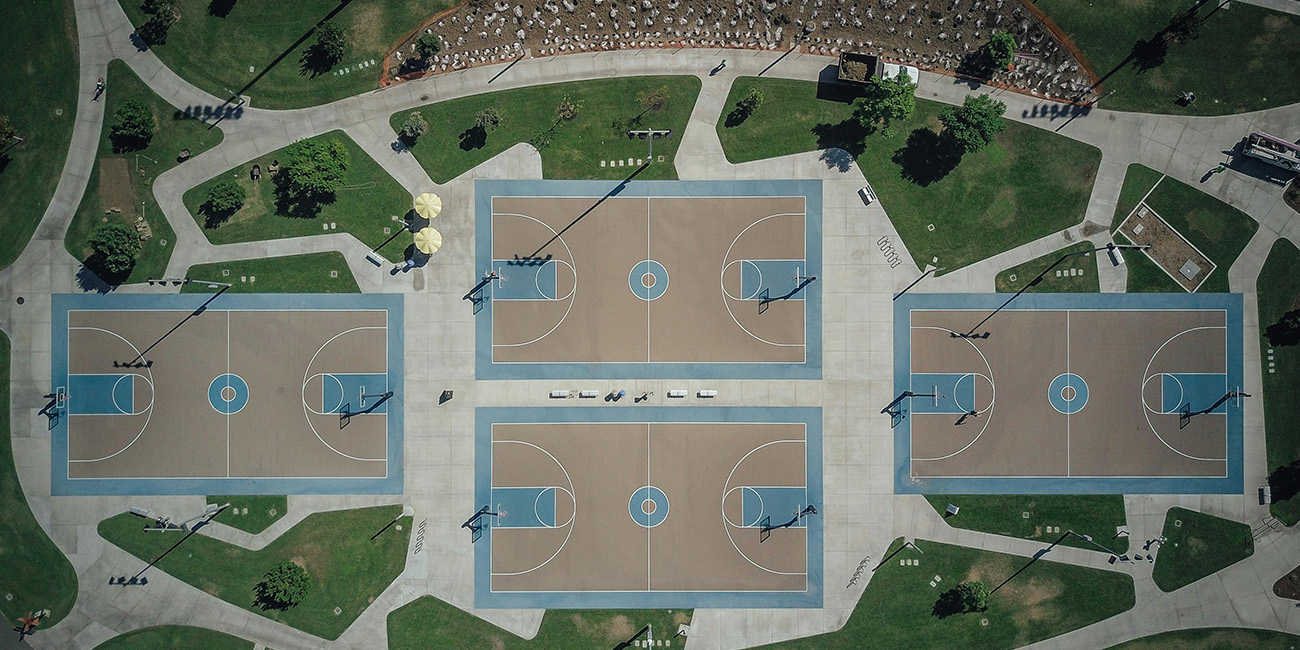
In the ever-evolving landscape of recreational and educational spaces, the Multi-Use Games Area (MUGA) has become a popular and practical solution for schools, community centres, sports clubs and local authorities across the UK. Designed to accommodate multiple sports within a single, purpose-built space, MUGA surfacing is a smart way to maximise usage and improve accessibility to sport and physical activity.
This guide explores what a MUGA is, the benefits it offers, why it’s gaining popularity, and how organisations can make the most of this innovative outdoor sports solution.
What Is a MUGA?
A Multi-Use Games Area (MUGA) is a versatile, all-weather outdoor space that can be used for a variety of sports and physical activities. Typically enclosed by fencing and built using durable, sport-specific surfacing, MUGAs are designed to support games such as:
- Football
- Basketball
- Tennis
- Netball
- Hockey
- Volleyball
- Cricket
- General physical education (PE) activities
MUGAs can be customised in size, surface material, line markings and sports equipment to suit specific user needs. They can range from basic fenced courts to fully-equipped, floodlit, multi-sport arenas.
Types of MUGA Surfacing
Choosing the right surface is essential for ensuring safety, performance, and longevity. The most common MUGA surface types include:
1. Macadam (Tarmac)
- Ideal for tennis, netball, basketball and general games.
- Low-maintenance and cost-effective.
- Can include anti-slip coatings and multi-sport line markings.
2. Polymeric Rubber Surfacing
- Softer underfoot and shock-absorbent.
- Suitable for athletics, basketball, netball and football.
- Great for schools due to its impact-reducing properties.
3. Artificial Turf / 3G & 4G Surfaces
- Mimics natural grass with improved drainage and durability.
- Perfect for football, hockey and rugby.
- Requires more maintenance but offers excellent performance for competitive sport.
4. Sand-Filled or Sand-Dressed Artificial Grass
- Popular for hockey and tennis.
- Provides consistent ball roll and grip.
- Suitable for both competitive play and recreational use.
Each surface type can be tailored to prioritise certain sports or to meet multi-sport functionality, depending on the needs of the users.
Why Are MUGAs So Popular?
1. Versatility
One of the key reasons for the rise of MUGAs is their ability to support multiple sports within one compact space. This makes them ideal for schools, councils, and community groups who want to encourage a wide range of physical activity without needing several separate pitches or courts.
2. Cost-Effective
Installing separate facilities for each sport can be costly in terms of both installation and ongoing maintenance. A MUGA reduces these costs significantly by consolidating multiple uses into one space, often with shared infrastructure such as lighting, fencing and access points.
3. Space Saving
Especially in urban areas where outdoor space is limited, MUGAs provide a compact and efficient solution. A single MUGA court can serve an entire community or school, helping to make the most of valuable outdoor real estate.
4. All-Weather Use
Thanks to durable, weather-resistant surfacing and proper drainage systems, MUGAs can be used throughout the year. Unlike grass pitches that become unusable during heavy rainfall, artificial surfaces provide consistent performance, regardless of weather.
5. Enhanced Safety
MUGAs are often enclosed with rebound fencing or mesh panels to keep play contained, reduce the risk of injury, and prevent unauthorised access. High-quality surfacing also reduces slips and falls, offering a safer alternative to poorly maintained or natural grass surfaces.
6. Customisable Design
MUGAs can be designed to match the specific needs of a location or community. Whether you want a primary school zone with vibrant line markings and soft surfacing, or a high-performance sports court with floodlighting and professional goals, a MUGA can be built to your exact specification.
Who Benefits from MUGAs?
Schools and Colleges
Education settings often struggle to provide enough sporting opportunities for students due to time, budget or space constraints. MUGAs solve this problem by offering a space that can host PE lessons, after-school clubs, team training and casual recreation – all in one area.
Community Centres and Parish Councils
MUGAs are an excellent way to encourage active lifestyles in communities. They can be used by people of all ages for informal games, local leagues or fitness activities. Open-access MUGAs help reduce barriers to sport, particularly in deprived or underserved areas.
Sports Clubs
Amateur sports clubs benefit from MUGAs by having a consistent and cost-effective training venue. MUGAs can also be hired out to generate revenue and encourage community engagement.
Housing Developments
New housing developments are increasingly including MUGAs in their planning to provide recreational opportunities for families and improve neighbourhood wellbeing.
Key Features of a Well-Designed MUGA
A successful MUGA goes beyond simply marking out a few lines. Here’s what to look for in a high-quality installation:
- Durable, sport-appropriate surfacing
- Multi-sport line markings
- Secure perimeter fencing
- Integrated goals, nets, or rebound boards
- Floodlighting for evening use
- Benches, shelters or storage nearby
- Accessible pathways and entry points
Customisation is essential to ensure the MUGA suits its intended users. For example, primary schools may opt for bright colours and softer surfaces, while community centres might need a full-size court with robust lighting and fencing.
How Often Do MUGAs Need Maintenance?
While MUGAs are designed to be low maintenance, regular upkeep is essential to preserve safety and performance. Maintenance schedules depend on the surface type and level of use, but generally include:
- Weekly inspections for damage or debris
- Monthly cleaning to remove moss, algae or litter
- Annual servicing for line repainting, surface conditioning or fencing repairs
- Resurfacing every 7–10 years, depending on usage
A well-maintained MUGA will serve its users reliably for over a decade, making it a wise long-term investment for any organisation.
Environmental Benefits of MUGAs
Modern MUGAs are often built with sustainability in mind. Features can include:
- Recycled rubber surfacing
Water-permeable bases to reduce runoff - LED floodlights for energy efficiency
- Minimal water usage compared to natural turf
By replacing underused or neglected land with a multifunctional play area, MUGAs also help to revitalise outdoor spaces and encourage eco-friendly community engagement.
Funding and Grants for MUGAs in the UK
Installing a MUGA is a significant investment, but there are a number of funding sources available for schools, councils and community groups, including:
- Sport England Community Asset Fund
- National Lottery funding
- Local authority grants
- Section 106 developer contributions
- School capital funding programmes
Securing funding often requires a clear plan, evidence of community need, and an outline of expected outcomes, such as improved physical activity or youth engagement.
Popular MUGA Configurations
Depending on your target users, here are a few of the most popular MUGA configurations in the UK:
1. Primary School MUGA
- Smaller scale
- Bright, engaging colours
- Soft polymeric surface
- Low-level fencing
2. Secondary School or Academy MUGA
- Full-size courts
- Tarmac or 3G surface
- Competitive line markings
- Optional floodlighting
3. Community MUGA
- Open access with fencing
- Hardwearing multi-sport surface
- Basic lighting
- Integrated basketball/netball goals
Future Trends in MUGA Design
As active living continues to be a national health priority, MUGAs are evolving to meet new demands. Future trends include:
- Smart MUGAs with integrated lighting, timers and booking systems
- Inclusive design for accessible sport (e.g., wheelchair-friendly layouts)
- Hybrid outdoor fitness zones combining traditional games with gym stations
- Nature-integrated courts, using green surfacing and eco-conscious materials
These innovations promise to make MUGAs even more valuable to schools, councils and communities looking to create inclusive and inspiring activity hubs.
Conclusion
Multi-Use Games Areas have firmly established themselves as a smart, flexible and future-proof solution to outdoor sport and recreation. Their popularity continues to grow — and it’s easy to see why. With the ability to support multiple sports, suit users of all ages, and provide reliable year-round access, MUGAs represent a fantastic return on investment for schools, communities and organisations alike.
Whether you’re seeking to promote physical health, provide safe play space, or revitalise an underused outdoor area, a MUGA delivers versatility, value and vibrancy in one compact design.