
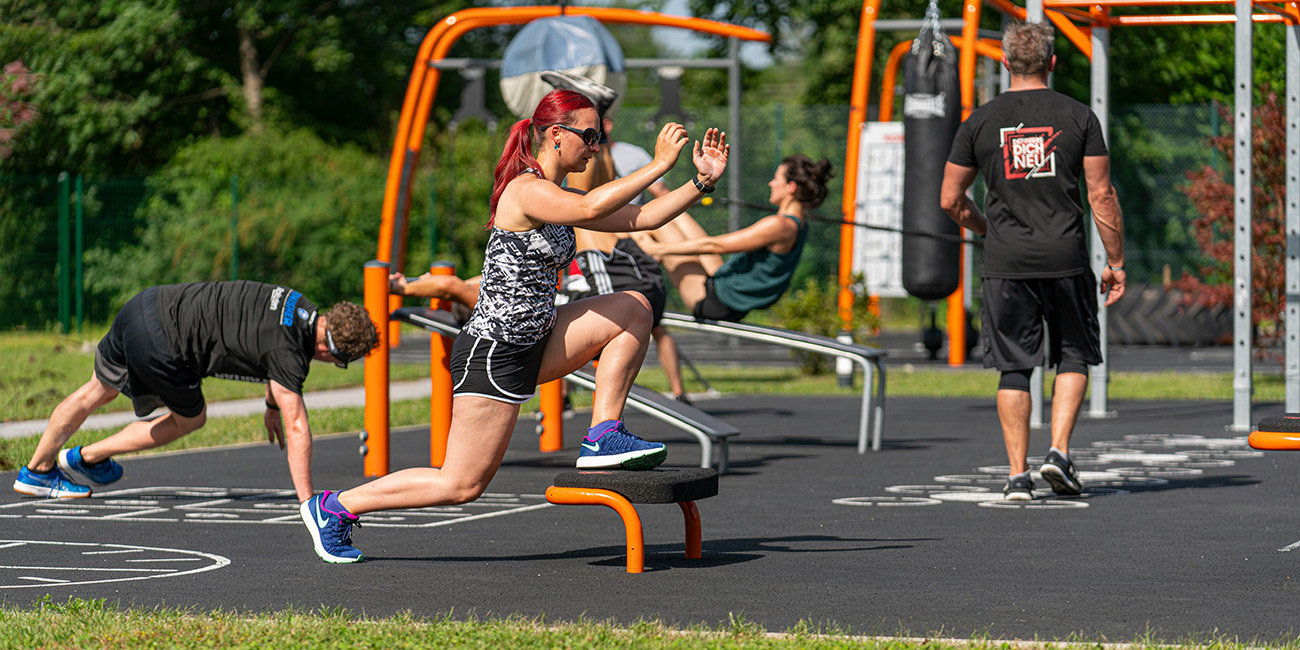
Outdoor gym equipment is becoming an increasingly popular feature in parks, schools, housing developments and other public spaces across the UK. More and more councils and developers are choosing to invest in outdoor fitness areas that are accessible to everyone. Whether you’re young or old, just starting out or already active, outdoor gyms provide a free and convenient way to exercise in the fresh air.
But beyond the convenience and cost savings, how exactly does outdoor gym equipment benefit the wider community? In this blog, we explore the advantages of outdoor fitness spaces and how they’re helping to create healthier, more connected neighbourhoods.
1. Accessible Exercise for All Ages
One of the main advantages of outdoor gym equipment is that it removes many of the barriers people face when trying to move, it encourages an active lifestyle. Traditional indoor gyms can be expensive, intimidating, or difficult to get to. Outdoor gyms, on the other hand, are open to everyone, completely free to use, and available 24/7.
Many outdoor fitness installations are designed with a wide age range in mind. You’ll often find low-impact equipment suitable for older adults or beginners, alongside more challenging stations like pull-up bars or cardio-based units for those wanting to push themselves.
This variety encourages people of all fitness levels to get involved. It also supports multigenerational use, so grandparents, parents and children can all benefit from physical activity in the same space.
2. Boosting Physical Health
Regular exercise is essential for good health, but many people struggle to fit it into their daily routine. Outdoor gym equipment encourages more people to build movement into their day, helping reduce health issues linked to inactivity such as obesity, heart disease, and type 2 diabetes.
Cardiovascular equipment like air walkers and cross trainers support heart health, while resistance-based equipment strengthens muscles and joints. Using your own bodyweight in exercises such as dips, squats and push-ups builds functional strength that helps with day-to-day tasks.
Unlike indoor gyms, outdoor fitness zones often invite spontaneous use. Someone passing by might be tempted to stop and try a piece of equipment, turning a short walk into a mini workout.
3. Supporting Mental Wellbeing
Physical health is just one part of the picture. Exercising outdoors has been shown to have a positive effect on mental health too. Exposure to natural light, fresh air, and green space helps reduce stress and anxiety while boosting mood and self-esteem.
Community gym zones can be a useful outlet for those dealing with mental health challenges. The act of moving your body and focusing on breathing or strength building can be meditative, helping to clear the mind and improve sleep patterns.
For people who may not want the pressure or atmosphere of a gym class or closed fitness space, outdoor gym areas offer a more relaxed environment. You can go at your own pace, in your own time, without any pressure.
4. Encouraging Social Interaction
While many people use outdoor gym equipment on their own, it also acts as a social space. Friends can meet to work out together, local fitness groups can use it for circuit training, and older residents can enjoy a gentle stretch and a chat.
This kind of interaction helps reduce social isolation, particularly among older people or those living alone. When exercise becomes part of a social routine, people are more likely to stick with it, which means the long-term benefits of fitness are more likely to be felt.
In new housing developments, parks, or shared green spaces, outdoor fitness zones can be a natural focal point for the community. Adding benches, signage and shade can make them even more inviting.
5. Low-Cost, Long-Term Investment
From a local authority or developer's point of view, installing outdoor gym equipment is a cost-effective way to promote public health. Unlike indoor leisure centres, there are no running costs, staff wages or utility bills to consider. Once installed, well-chosen outdoor fitness equipment can last for many years with minimal maintenance.
It’s a smart way to demonstrate a commitment to residents’ wellbeing, and it can contribute towards local health strategies, S106 planning obligations, or sustainability goals. Suppliers now offer a wide range of equipment built to withstand British weather conditions and heavy use, so long-term value is assured.
6. Promoting an Active Lifestyle in Children and Teens
Children and young people benefit from active play, but traditional playgrounds don’t always keep older kids interested. Outdoor gym equipment designed specifically for teens can help bridge that gap. These areas give them somewhere to challenge themselves, learn about fitness, and spend time away from screens.
Installing youth-focused fitness trails or calisthenics equipment encourages movement while also teaching responsibility. It shows young people that they are part of the community and gives them a positive outlet for energy.
Some local areas have reported reduced antisocial behaviour after introducing outdoor gyms, as they provide teens with something constructive to do during evenings or weekends.
7. Encouraging Habit Formation and Routine
One of the biggest benefits of having free-to-use fitness equipment in public spaces is that it encourages repeat use. People are more likely to exercise regularly when it’s convenient, familiar and fits into their routine. When gym equipment is located near walking routes, schools, car parks or bus stops, it becomes a natural part of the daily environment.
This makes a huge difference in encouraging healthier lifestyles. Small changes, like doing a few stretches after a walk or adding a quick workout before work, can add up to long-term improvements in strength, mobility and mood.
8. Flexible Design for All Locations
Another reason outdoor gym equipment is growing in popularity is its versatility. Equipment can be installed in parks, along trails, next to playgrounds, on beaches, school fields, or in community gardens. A fitness area can be large or compact depending on the space available.
For example, some sites use a linear fitness trail design that encourages people to walk, jog or cycle between stations. Others prefer a hub design with equipment grouped together in one space. The layout can be adapted to suit different needs, whether the focus is on cardio, strength, accessibility, or multigenerational use.
Conclusion
Outdoor gym equipment is more than just a fitness trend—it’s a smart, inclusive way to support public health. From increasing access to exercise and supporting mental wellbeing to fostering community spirit, these spaces are playing an important role in how UK communities stay active.
For councils, housing developers, schools and community groups, investing in outdoor gym zones delivers long-term benefits. With the right design, quality materials and thoughtful placement, outdoor fitness equipment can improve the lives of people of all ages—one workout at a time.