

Key takeaways
- Modern stadium technology for the 21st century is moving from simple screens to full immersion with every spectator sucked into the action.
- Smart stadiums are a new paradigm for linking the in-person seats, mobile apps and broadcast into a continuous live experience.
- And when you look to plan AV solutions centred around the entire journey of fans, you can enhance revenue, operations and long term stadium operations.
- Data, lighting, and audio, working together, can change a game day in fans' minds, and their likelihood to return, in near-silence.
Why Immersive AV is more important than ever
If you consider your first big stadium experience it was likely simple. A main scoreboard, some music, maybe the basic replay. You watched as a spectator.
Today, fans have expectations that are closer to the immersive sports stadium experience. They want to interact with the game, watch live statistics on the spot and feel closer to the action at every seat.
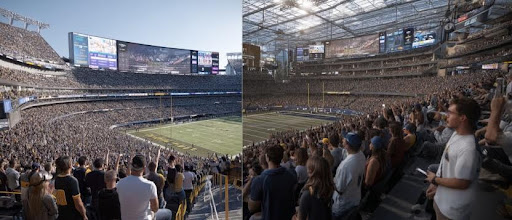
Recent surveys of major sports venues reveal that younger fans rate the technology in stadiums as nearly as high as the team itself. I see this quite a lot when I walk through projects with venue operators. They are concerned less with concrete and more with screens, audio systems and connectivity.
The business side is clear. Better AV can increase the life of the dwell time, increase per head spend, and give sponsors richer inventory. And when the experience is memorable, people come back, bringing other people.
Key AV Components That Influence Fan Experience
When you take apart a modern stadium, the basic components of the concept are very familiar, but the expectations are different.
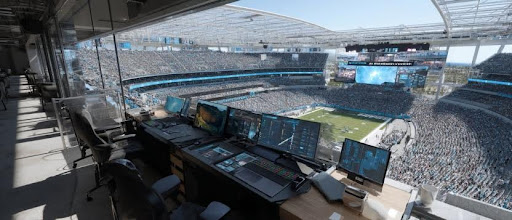
You have led screen, video walls, led walls wrapping the bowl. Fans demand crystal clear replay, live streaming clips and interactive digital prompts with real-time response. I recall being in a mid size stadium watching the old board struggle in the daylight. After the installation of a new centre display, compliments decreased and merchandise sales near the main concourse skyrocketed.
Distributed audio systems are now being used for concourses, fan zones, suites, and exterior plazas. Good sound systems are not about volume. They are about clarity, zoning, immersive sound systems that match what's going on on the field.
Behind it all sits the control room, tying cameras, signage and content into one heartbeat of operation. When that room works well, the experience is natural, rather than forced, in the stadium.
Immersive Visual Experiences: More Than the Big Screen
Visuals have a lot of weight attached to them in any stadium AV plan. It is not just over one big board anymore.
Modern stadiums and arenas have 360 degree ribbons, facade displays and video walls to produce immersive experiences that envelop the bowl. I watched one arena use projection mapping on the court to explain the history of the team before tipoff. The crowd fell silent, and then exploded. That is another level of engagement you can't get out of a static sign.
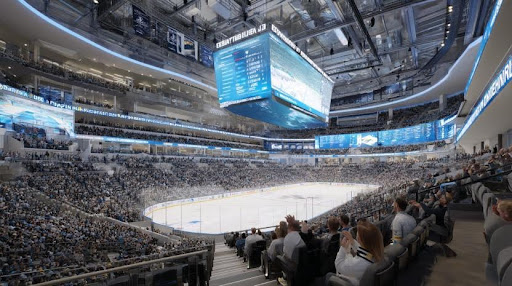
Interactive digital content may react to live statistics, crowd noise or even mobile apps. When you coordinate visuals with audio and lighting you begin to create an immersive environment that feels coordinated rather than random.
This is where the cutting edge av tech and augmented reality moments can wriggle their way in. Short, sharp and tied to the live event and not just a gimmick.
Audio Experiences That Draw Fans Into the Action
The one area that many projects fall short is on audio. People recognise bad sound instantly.
Immersive audio is not as much about shaking the seats as it is about hashing in a balanced sensory experience. You want good announcements, music to match the occasion and crowd noise that is somehow natural. I walked once in a bowl where the echo was so great you could not make out the referee. After a redesign using focused speakers and improved tuning, complaints all but disappeared.
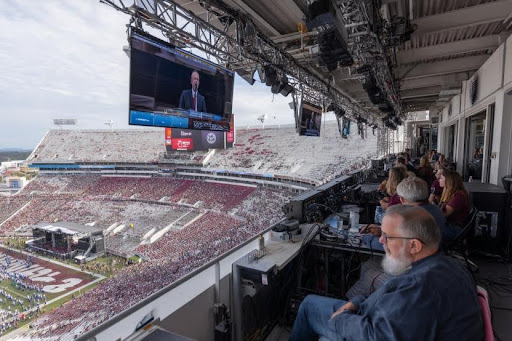
Distributed audio systems allow you to treat suites and concourses as well as family areas differently. A sponsor lounge may want more of the sound of commentary, while supporter sections want the sound of drums and chants.
Good audio systems are also related to safety. When something happens you need every spectator to hear instructions clearly, even in the noisy fan zones.
Smart Lighting and sports lighting Integration
Lighting Used to be a Background Detail Flip it on, forget it. That is gone.
Today, field lighting and sports lighting rigs sync with video, audio, and content cues. I saw a club programme an at goal sequence where the entire venue pulsed in their colours. It did not cost millions but it was unforgettable.
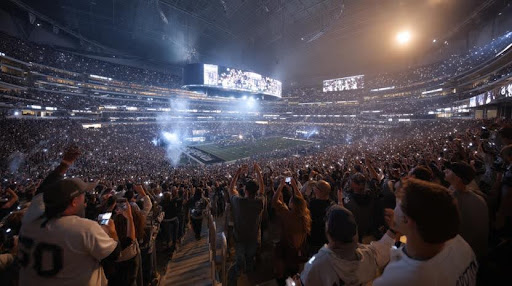
LED based systems reduce the amount of energy consumption and maintenance while providing you with immediate control. You can dim, colour transform or pattern in real-time. That flexibility is in support of broadcast as well. Good quality lighting doesn't flicker the camera, is not a nightmare to watch the replay of a slow motion action, and keeps it happy.
U.S. Department of Energy's Sports and Entertainment Venues guidance provides you with a great source that you can reference in this point. It enables your reader to verify the claim with a document which he can cheque.
When you consider lighting to be part of the show and as part of operations, it is quiet effective in the overall venue experience and sponsor inventory.
Connected Fans: Mobile, Social and Second-Screen Experiences
Technology has become the link between the seat and the screen.
High-speed wi-fi networks and other connections are now basic infrastructure. Without good connectivity in the stadium, your best content never reaches phones. Smart stadium technology relies on this layer to power mobile apps, live stats and even smart ticketing systems.
The International Telecommunication Union's article on smart stadiums describes how high capacity networks and 5G connectivity are used for real-time apps and personalised content as well as for seamless in-venue digital services. ITU notes that such connected platforms not only improve fan engagement but also provide richer data to operators for optimising operations and new revenue sources.
When you give fans a personalised stream of offers, replays and wayfinding, they are engaged. I have seen stadiums where the usage of apps doubled after a network upgrade, which then supported more data for better and more targeted campaigns.
Fans love to share their experiences on social. If you provide them with prompts they can write on boards, as well as safe ways to share their experiences in the social media realm, you are increasing your reach beyond the building.
Data-Driven Autonomous Vehicle: Personalization, Monetization
Real-time data is where modern AV technology begins to feel like a business engine.
You can monitor movement, spend time, and buying behaviour for sports and entertainment venues. When you see a line of concession spiking, you can tweak the signage or send out a quick offer. I worked with a venue who had to change a drink promotion in the middle of a match and managed to clear a backlog in ten minutes.
Dynamic content allows you to adjust messaging based on score, quarter or even weather. Sponsors like this because it's not so generic and boring.
Over time, AV infrastructure and iot technology can offer fans a customised blend or mix of content. The experience becomes less one size fits all and more attainable in response to who is actually in the building.
Designing The Fan Journey with AV in Mind
If you just think about the bowl, you don't get half of the stadium.
The venue experience begins at the time people purchase tickets, and continues with parking, entry, concourses, restrooms, and exit. Smart stadiums are a move to map each touch point, and ask ways AV can increase fan expectations.
Interactive digital signage has the ability to direct traffic, reduce lines and soothe nerves. Clear messaging at gates eliminate friction. Inside, wayfinding and content get people interacting with the game even when they are away from their seats.
Accessibility matters too. Captioning, the use of assistive listening and simple visual cues help all guests keep up with what is taking place. When you design for everyone, you are quietly building fan trust and loyalty.
Operations, Integration and future proofing
Behind the scenes stadium av and modern av planning can be messy. This touches on security, IT, events and facilities.
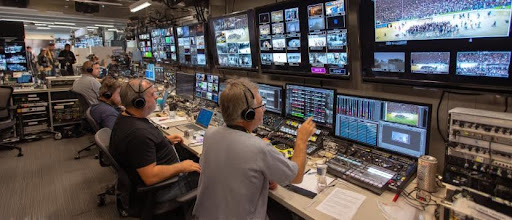
Good av solutions designed for the long term integrate with building systems, emergency alerts and smart ticketing systems. One example of a weather delay I observed was handled quite calmly because the same network that was carrying content was also pushing out clear instructions via boards, audio, and mobile.
Scalable av and scalable infrastructure is what matters. You might not need a virtual stadium today, but you probably want this option to stream more, add new led walls or support new formats in the future.
I think venue operators who are treating the av as a living system and not a one time purchase, are seeing better operational efficiency and fewer surprises.
Budget and ROI for Stadium AV Projects
Money always brings the conversation back to earth.
You do not need the latest cutting edge technology everywhere on day one. Many sports venues undertake phase upgrades, yet they begin with core audio (main board), core audio, and connectivity. Then they layer in fan zones, interactive digital elements and more sophisticated tools.
The key is to link every spend with unambiguous outcomes. More tickets, better sponsor deals, easier stadium operations or safer. Track before and after numbers on attendance, per cap spend and partner renewals.
When you are able to demonstrate that cutting edge av and cutting edge av technology are helping redefine what it means to attend a live event, the boardroom conversations get easier.
Practical Steps to Planning Your Next AV Upgrade
If you are thinking of making some changes, start simple.
Walk your stadium during game day. Watch where people stall, where they look confused, where people pull out phones. Talk to staff. They know the pain points. That informal audit can often tell you more than a pretty report.
Next, get marketing, operations, IT, and security into a room. Ask what they are looking for from av technology to support sports and live events. You will hear different priorities and that is a good thing.
Finally, you will be looking for partners with actual stadium experience, not just generic av. Ask how their av solutions designed for sports and entertainment can be flexible in the long term, over a period of ten years. The future in sports and entertainment will continue to change but having a smart plan in place today will still help to improve and change the future.