
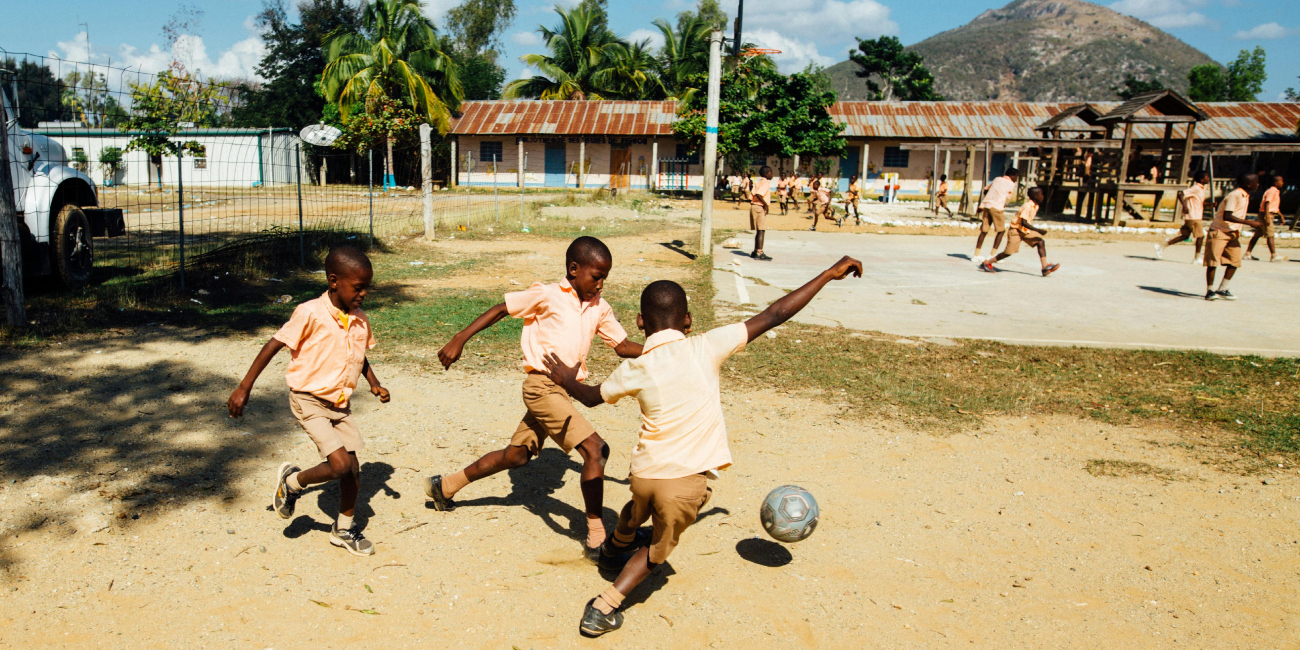
Playgrounds spark instant community by pulling families together for routine interactions. They serve as natural headquarters for local events and fuel a neighbourhood culture of active play.
Well-designed play spaces do more than keep children entertained. They build the physical infrastructure for social cohesion.
When municipalities and schools invest in accessible outdoor equipment, they create low-barrier gathering hubs. These hubs encourage residents to connect and linger.
1. How Playgrounds Pull Families Together
The most fundamental playground benefit is deceptively simple. It gives families a low-barrier reason to leave the house and occupy the same outdoor space. There is real science behind why this matters for development.
The CDC states that children and adolescents aged 6 to 17 years should engage in at least 60 minutes of moderate-to-vigorous physical activity daily . When a neighbourhood offers a safe outdoor play space, families prioritise it. They return to it regularly, and every visit is another opportunity for neighbours to connect.
However, playground design determines who shows up and how long they stay. A single-age structure that serves only younger children sends parents of toddlers and tweens home early.
A multi-age system offers appropriate challenges for all ages simultaneously, keeping every caregiver anchored to the same space. That overlap is exactly where family gatherings happen organically.
Inclusivity amplifies this effect significantly. Integrating standard structures, such as WillyGoat's safe playground equipment , provides the physical framework for inclusive play. Designs featuring ramp-accessible entry points and sensory elements send an unmistakable signal that everyone belongs. The right equipment transforms a basic recreational area into a consistently used social hub
|
Key Insight: The true magic of playground socialisation relies on inclusive, multi-age design. When structures cater simultaneously to toddlers, tweens, and all physical abilities, caregivers stay anchored, allowing authentic neighbourhood relationships to blossom. |
2. Why Playgrounds Become Event Headquarters
A playground earns its value far beyond the hours when children are actively using the equipment. In the right setting, it becomes the anchor for an entire community calendar. A well-sited outdoor play space enables diverse programming for all ages.
A church can host a harvest festival where children explore the play area while adults browse vendor tables. A school can run a summer reading kickoff where families spread blankets on the lawn.
An HOA can easily organise a holiday fair or a back-to-school cookout. These gatherings are more successful because the equipment gives families a concrete reason to attend.
The National Recreation and Park Association consistently documents that parks serving as event venues show measurable increases in civic engagement.
The more programming a shared outdoor space supports, the stronger the social fabric around it. However, the play structures are only part of the infrastructure equation.
Community events also require comfort and durability. Commercial-grade shade structures keep summer programming accessible even in peak heat.
Park benches and picnic tables invite attendees to sit and connect. Securing these necessary amenities ensures seasonal installation windows are met without complex delays.
|
Pro Tip: Don't overlook auxiliary infrastructure! To maximise your playground as an event hub, prioritise commercial-grade shade structures and durable seating. Comfort encourages families to linger and connect long after the play session ends. |
3. How Playgrounds Fuel Active Sports Pride
A playground positioned near an athletic field does not sit passively alongside the action. It extends the energy of the entire outdoor space. The area keeps families rooted to it long before the first whistle blows and after the final score is settled.
Research shows that regular physical activity in children and adolescents promotes health and fitness . Compared to those who are inactive, physically active youth have higher levels of fitness, lower body fat, and stronger bones.
A quality play area adjacent to athletic facilities creates an intentional on-ramp to a lifetime of movement. It also supports the mechanics of local sports culture by providing auxiliary spaces.
When a youth soccer team practices on a Tuesday evening, younger siblings need a place to engage. A playground adjacent to the sidelines keeps young children active without requiring parents to leave.
Furthermore, physical activity also has brain health benefits for school-aged children , including improved cognition and reduced symptoms of depression. Following weekend games, the post-game social time easily extends because children are occupied on the swings.
This dynamic scales beyond youth sports entirely. Integrating outdoor fitness equipment for teens and adults communicates that the space is designed for multi-generational use. When a public space visibly serves multiple interests, community spirit compounds.
Prioritising durable construction guarantees these outdoor environments encourage active play while meeting strict safety requirements.
|
Quote: "Accessible, well-designed outdoor infrastructure is one of the strongest predictors of youth physical activity levels, creating an intentional on-ramp to a lifetime of movement and community sport." - Harvard T.H. Chan School of Public Health Research |
Why Your Community Cannot Afford to Wait
The three concepts outlined above are not isolated benefits. They form a compounding cycle of community engagement.
The playground that draws families on a Wednesday afternoon becomes the anchor for a Friday night event. The families who connect at that event eventually organise the spring sports leagues.
These leagues generate the consistent foot traffic that turns a physical space into a true community institution. Communities lacking quality outdoor gathering spaces miss out on vital connections and intergenerational relationships.
Building these areas establishes the foundation for a more connected neighbourhood tomorrow. Investing in thoughtful infrastructure ensures that communities have a shared space to gather and thrive.
|
Important: Communities lacking quality outdoor gathering spaces suffer a steep invisible cost. Delaying investment in inclusive play infrastructure actively limits vital neighbourhood connections, civic pride, and essential intergenerational relationships. |
|
Author Profile: WillyGoat is the leading online retailer of commercial playground equipment for schools, parks, churches, daycares, and communities across America. |