
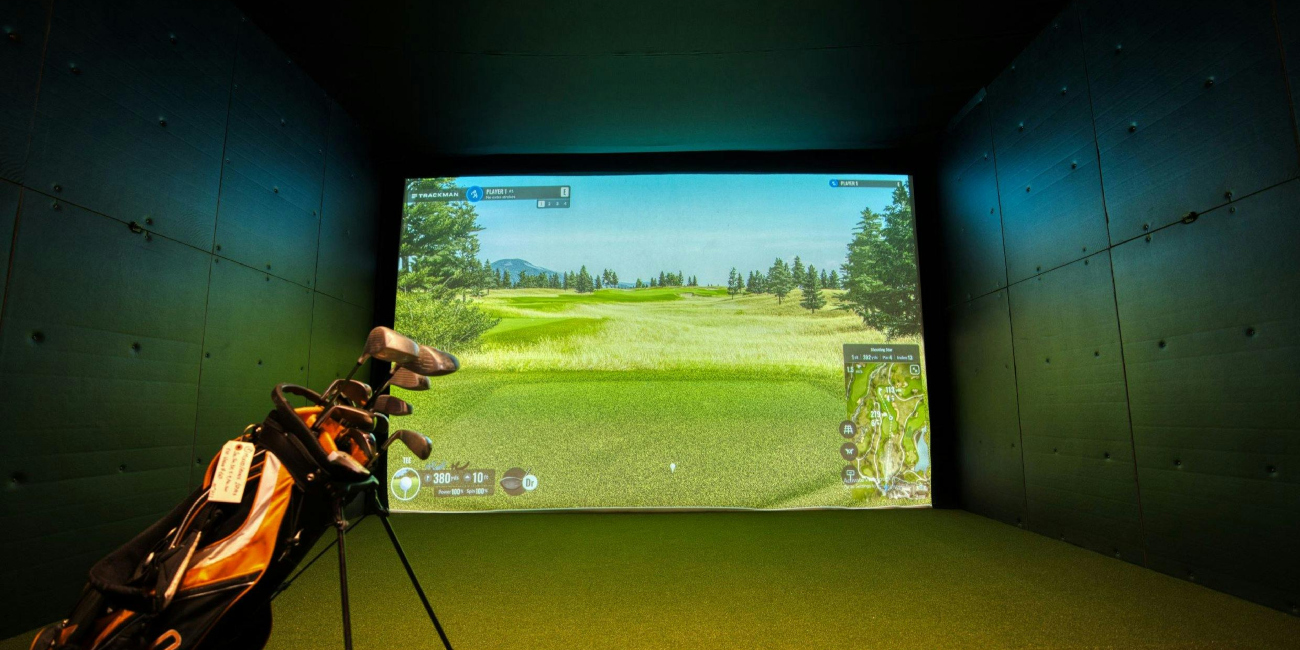
The three essential simulator tricks boosting swing precision include using real-time data feedback to eliminate accuracy guesswork, simulating pressure scenarios to sharpen decision-making, and building year-round consistency through weather-proof practice that prevents skill decay.
Elite athletes across multiple disciplines rely on these specific methods within sports training technology to bridge the gap between casual practice and peak execution.
By treating each session as a measurable performance metric, competitors can isolate technical flaws and accelerate their overall development.
Research published in the Journal of Sports Sciences indicates that top-tier athletes outperform peers through superior pattern recognition, faster decision cycles, and more consistent technical execution under pressure. This holds true whether a quarterback is reading a defence or a golfer is selecting a club on a tight par-3 with a crosswind.
Both sports require data, precision, and the ability to perform when the stakes are highest. Athletes increasingly rely on advanced setups, such as Rain or Shine Golf's premium low-lag golf simulator for sale , to close the gap between practice and peak performance.
Golf simulators have transitioned from recreational items into versatile precision sports training tools, utilising the same performance science that drives modern athletic development.
According to the National Golf Foundation's 2025 research, an estimated 8.1 million Americans used golf simulators or screen golf in 2024, up 126% from 3.6 million five years earlier.
1. Use Real-Time Data Feedback to Eliminate Accuracy Guesswork
Without objective data, practice sessions can groove incorrect habits just as effectively as proper mechanics. Golf simulators fundamentally alter this training equation by capturing objective swing metrics that expose flaws that feel alone cannot detect.
Studies confirm this advantage, as the technology feedback group demonstrated significantly greater improvements in swing direction at post-training (p < .001), retention (p < .001), and the final session (p < .001) compared to the control group.
What the Data Actually Captures
Modern launch monitors track a suite of swing and ball-flight metrics. Key data points include clubhead speed, face angle at impact, attack angle, ball spin rate, and total dispersion. Dispersion reveals the consistency of ball flight.
A tight dispersion pattern indicates repeatable, controllable mechanics, while a wide spread highlights exactly which variables are sabotaging accuracy.
The Football Parallel
Quarterbacks use film review and real-time GPS tracking data to identify release point inconsistencies.
Similarly, a golfer might discover through launch monitor feedback that their face angle fluctuates four degrees from shot to shot. This pattern remains invisible to the naked eye but is highly detrimental to scoring.
The Pitching Accuracy Challenge
Set the simulator target at exactly 100 yards. Hit 10 consecutive shots with the same club and intended trajectory, then review the dispersion map after the set. Identify outliers and note the corresponding face angle and attack angle data.
Repeating this weekly tracks how groupings tighten over time, forming the foundation of improving accuracy in any precision sport.
|
Pro Tip: Don't just look at single shots. The true value of simulator data lies in analysing your dispersion map over dozens of swings to expose hidden mechanical flaws and track real progress. |
2. Simulate Pressure Scenarios to Sharpen In-Game Decision-Making
Elite performance requires decision fluency and the ability to process situational variables without hesitation. A 2019 study in Frontiers in Psychology demonstrated that athletes training in realistic, high-stakes simulated environments make faster, more accurate in-game decisions.
Simulation platforms replicate playing conditions that force strategic thinking rather than just physical motion.
How Simulator Software Creates Pressure
Features include adjustable wind speed and direction, elevation changes, tight fairways, and realistic green undulations. These variables transform every shot into a calculated decision rather than a simple physical motion.
Facing a simulated par-3 over water with heavy winds requires cognitive rehearsal that transfers directly to physical courses.
The Football Parallel
Quarterbacks practice reading coverage and processing progressions under simulated pressure, as defensive coordinators script specific looks to stress cognitive decision-making.
Simulator software places golfers in similar risk-reward scenarios. The mental processing required in both training environments builds resilience for real-world execution.
The Pressure Scenario Set
Load a challenging par-3 hole in the simulator software and set the wind to 12-18 mph at a difficult angle. Play the hole five times consecutively while recording each attempt. Track outcomes alongside the decision process regarding club selection and mental commitment.
Reviewing this data identifies patterns between indecisive choices and poor dispersion, building crucial decision-making skills over time.
|
Key Insight: Physical mechanics often break down when cognitive pressure spikes. Simulating harsh weather and high-stakes shots ensures your mind is as prepared as your swing when stepping onto a real course. |
3. Build Year-Round Consistency With Weather-Proof Practice
Motor learning science indicates that skill retention requires regular, high-quality repetition. Extended breaks can erode the neuromuscular patterns necessary for a consistent swing, causing significant skill decay.
Many athletes spend spring and summer building skills, only to lose progress during the winter months.
The Off-Season Trap
Serious football training programs prevent this by focusing heavily on fundamentals and conditioning during the off-season.
Year-round practice with indoor setups provides that same competitive edge, preventing the need for remedial training when the season opens.
Consistent simulator sessions maintain swing muscle memory, tempo, short game touch, and course management habits.
How Indoor Practice Preserves Technical Skills
Distance control for pitches and chips fades particularly fast without repetition, making regular off-season engagement critical.
Advanced tracking ensures these micro-skills remain sharp regardless of outdoor weather conditions. The combination regimen led to a notable improvement in swing performance , including club head speed, ball speed, driving distance, and hitting efficiency.
The Off-Season Consistency Block
Commit to four 45-minute simulator sessions per week through the winter. Dedicate two sessions to technical work with launch monitor feedback and two to simulated course play under varied conditions.
Track key metrics monthly, such as clubhead speed and dispersion, comparing the spring baseline against pre-winter numbers. Structured indoor training routines ensure athletes begin the new season ahead of their previous baseline.
|
Important: Skill decay happens faster than you think. Short game touch and distance control can fade within weeks of inactivity, making regular off-season simulator practice essential for maintaining your competitive baseline. |
Sourcing Equipment for Optimal Skill Development
Implementing these three strategies requires matching the right hardware to specific training goals. The market offers various tiers of technology to facilitate off-season skill retention. Portable launch monitors deliver crucial accuracy feedback for budget-conscious applications.
Mid-range systems provide reliable data for dedicated home practice spaces by utilising durable enclosures. Pro-grade environments utilising advanced units offer immersive, highly accurate scenario training.
Utilising online customisation tools helps ensure the selected hardware and hitting surfaces fit the physical dimensions of the room, maximising the effectiveness of the installation.
The Bottom Line
Accuracy, decision-making, and year-round consistency are the measurable, trainable foundations of competitive performance in any precision sport. These skills respond directly to the structured, data-rich repetition that advanced technology reliably delivers.
Athletes who improve fastest practice efficiently, utilising tools that make smart practice accessible and season-proof.
Structured off-season training builds a competitive edge, turning winter months into a period of active development rather than inevitable skill erosion.
Adopting these advanced techniques transforms standard practice into a highly calibrated performance pipeline. Ultimately, integrating objective data and simulated pressure ensures you are always ready for the real course.
|
Quote: "Amateurs practice until they get it right; professionals practice until they can't get it wrong. Advanced simulators bridge this gap by turning the off-season into a period of measurable athletic development." - Sports Performance Principle. |
|
Author Profile: Rain or Shine Golf is the leading online retailer and manufacturer of golf simulators, launch monitors, and indoor golf equipment for golfers who believe golf is more than a game. |